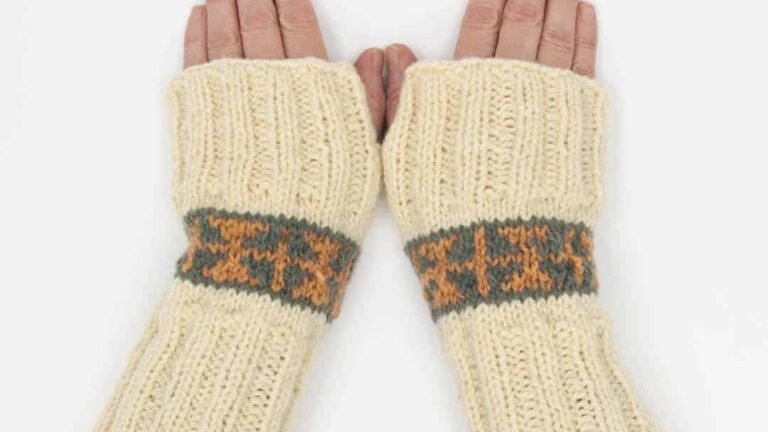
Well, it’s a very cold and snowy March here which brings to mind issues of warmth. Did you know there’s a matching knitted hat pattern to go along with the ‘Wheelers Mitts’ pattern?
You bet! Have a read and cast on! Create your own fun variation. Enjoy knitting up some textile history.
Wheeler Hat and MittsWheeler MittsWheeler Hat 1Wheeler Hat 2
Wheeler Hat Knitting Pattern
SIZE One size to fit adult. YARN 1 skein (113 g/4 oz) worsted weight wool in light colour (MC); 1 skein in medium(A); 1 skein in dark (B). NEEDLES: Sizes U.S. 6 (4 mm) and U.S. 7 (4.5 mm) circular knitting needles 16″ [40.5 cm] long. Set of four size U.S. 7 (4.5 mm) double-pointed knitting needles or size needed to obtain gauge. Stitch marker. GAUGE: 20 sts and 26 rows = 4″ [10 cm] in stocking st with larger needles. NOTE: the background colour becomes the motif colour in the next band in the Wheeler Chart.
Please see chart as in the Wheelers Wristers & Mitts pattern for reference.
Wheeler Chart
INSTRUCTIONS With MC and smaller circular needle, CO 96 sts. Join in rnd and PM on first st. 1st rnd: *K2. P2. Rep from * around. Rep this rnd of (K2. P2) ribbing for 1½” [4 cm]. Next rnd: *M1. K12. Rep from * around. 104 sts. Change to larger circular needle and proceed as follows: 1st rnd: Knit with MC 2nd to 9th rnds: Knit rows 1 to 8 of S&P chart, noting 8-st repeat will be worked 13 times. 10th to 17th rnds: Knit rows 1 to 8 of Wheeler chart, noting 8-st repeat will be worked 13 times. 18th to 25th rnds: Knit rows 1 to 8 of S&P chart, noting 8-st repeat will be worked 13 times. 26th to 48th rnds: Knit with MC Crown shaping: 1st rnd: *K11. K2tog. Rep from * around. 96 sts. 2nd, 4th, 6th and 8th rnds: Knit. 3rd rnd: *K10. K2tog. Rep from * around. 88 sts. Change to DPNs 5th rnd: *K9. K2tog. Rep from * around. 80 sts. 7th rnd: *K8. K2tog. Rep from * around. 72 sts. 9th rnd: *K7. K2tog. Rep from *around. 64 sts. 10th rnd: *K6. K2tog. Rep from * around. 56 sts. 11th rnd: *K5. K2tog. Rep from * around. 48 sts. 12th rnd: *K2. K2tog. Rep from * around. 32 sts. 13th rnd: *K1. K2tog. Rep from * around. 24 sts. Break yarn, leaving a long end. Thread end through rem sts and draw up tightly. Fasten securely. Pompom (optional) Wind MC, A, and B around 4 fingers 25 times. Tie tightly in the middle and leave a long end for attaching to hat. Cut loops at both ends and trim to smooth round shape. Sew securely to top of Hat. Abbreviations CO cast on DPNs double-pointed needles K2tog knit 2 stitches together M1 make 1 (note: choose favourite method) MC main colour P purl PM place marker REM remaining REP repeat RND round S&P salt and pepper ST/S stitch/stitches
Wheeler Mitts Knitting Kits
Would you like to try your hand at knitting the Wheeler Mitts? The Huron County Museum has a number of Wheeler Mitts knitting kits available for purchase. All proceeds from the kits go to the care of the wonderful textile collection at the museum.
Recreating the pattern of a knit counterpane bureau scarf from the collection of the Huron County Museum and Historic Gaol is a fascinating trip through vintage knitting patterns and traditions.
Counterpanes – white bed coverlets or bedspreads – were quite popular in the mid-1800s and into the 1900s and were traditionally made from white or cream-coloured cotton yarn that was so readily available at that time. The coverlets were also sometimes called quilts and were pieced together, comprised of square or circular motifs for example, in a similar way as a quilt top.
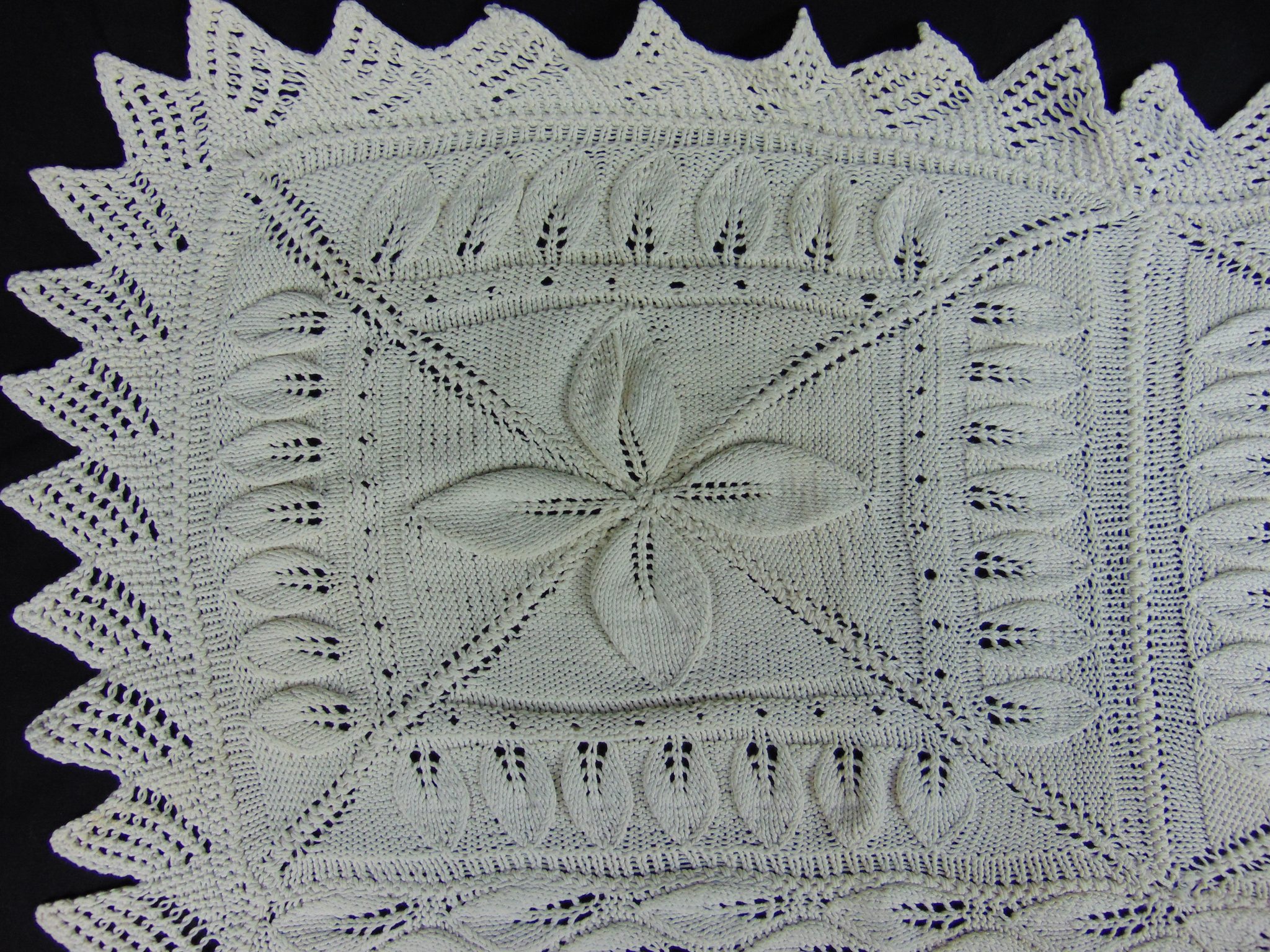
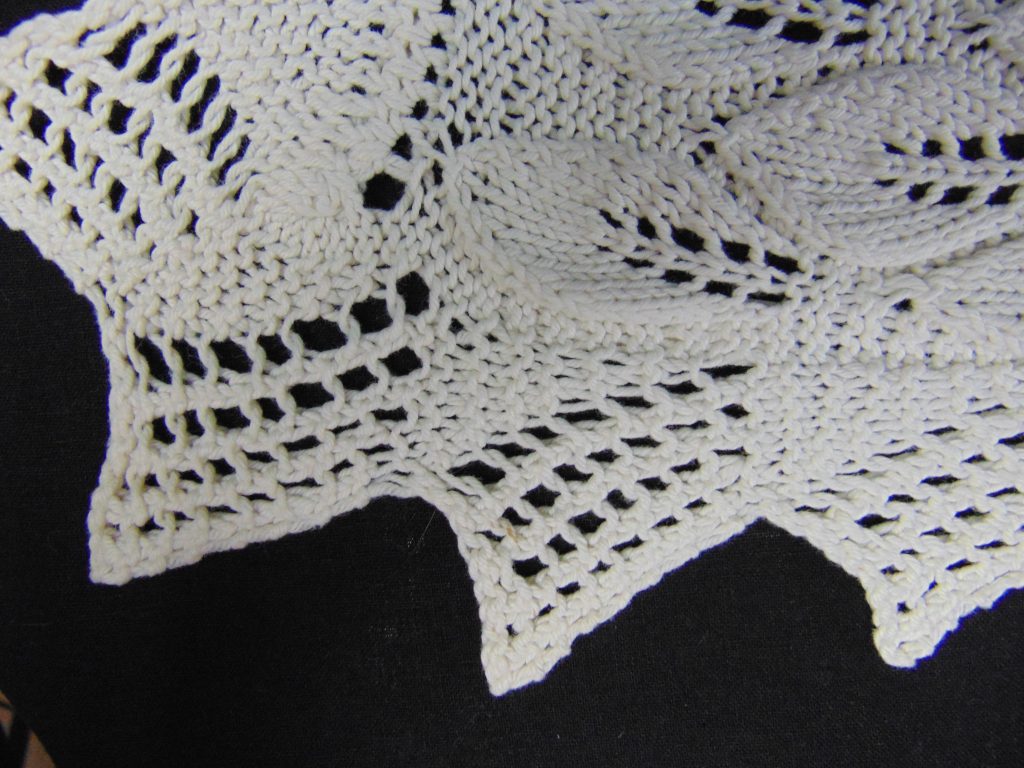
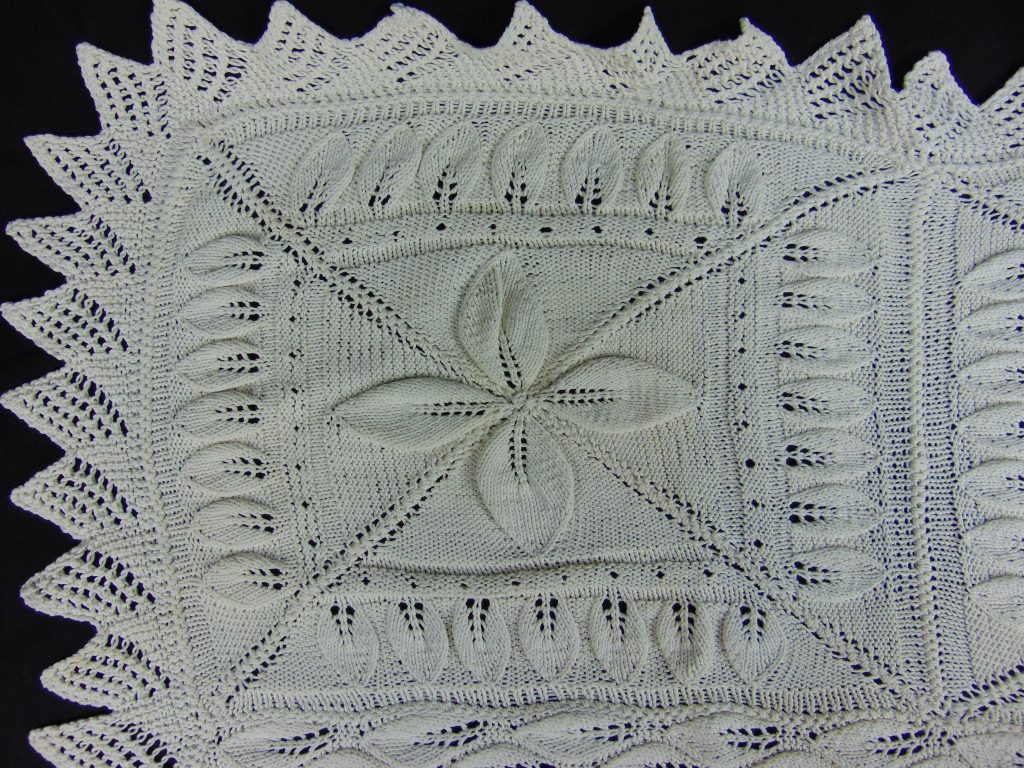
The inspiration. This photo shows the upper-left corner of the original heirloom knit counterpane bureau scarf in the collection of the Huron County Museum and Historic Gaol. (Photo courtesy of the Huron County Museum and Historic Gaol)
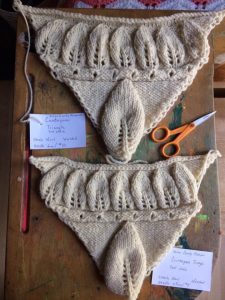
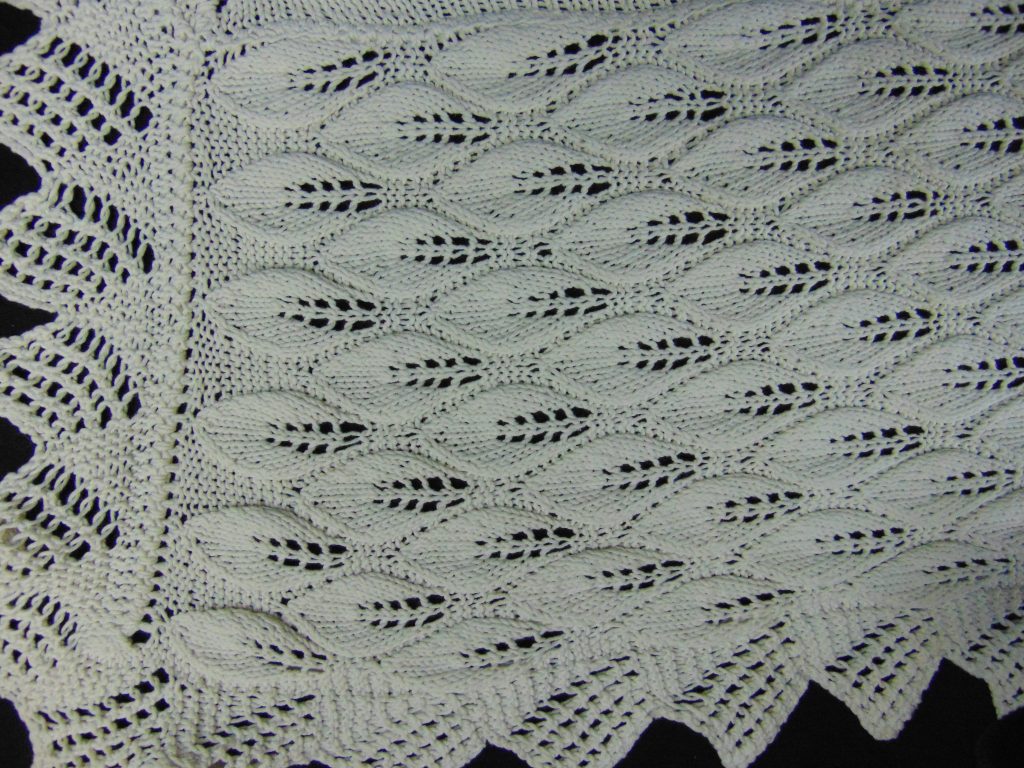
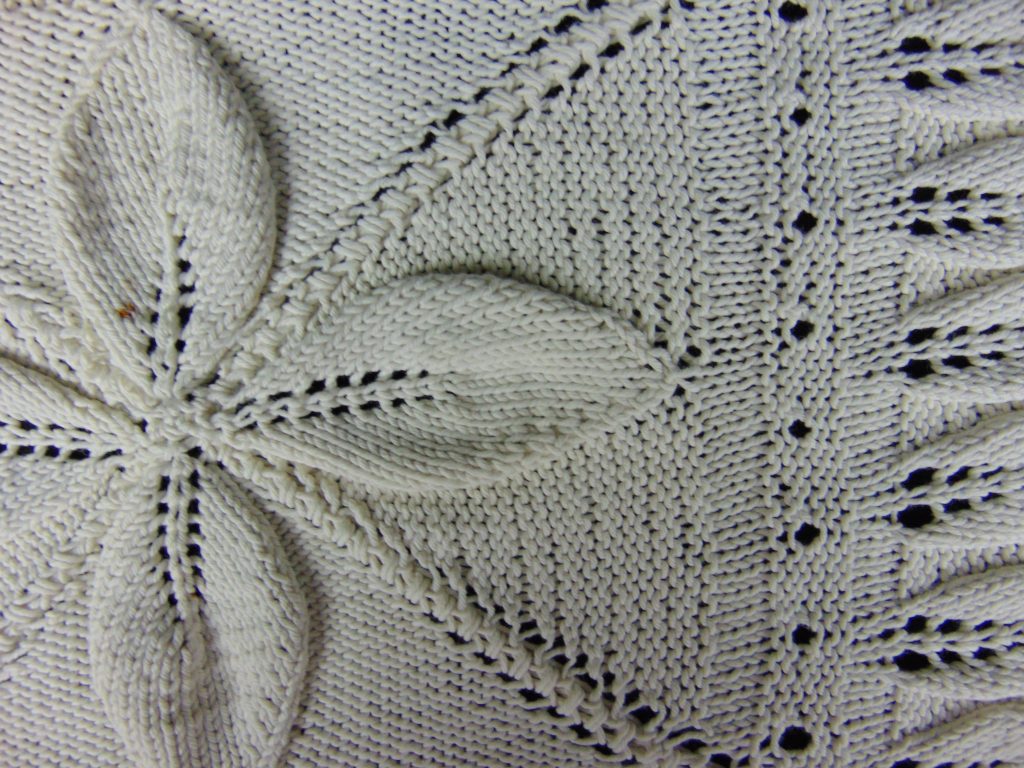
The knitted 1890 counterpane bureau scarf in the museum collection consists of three components: 3 squares made up of 4 triangles each, a leaf panel below the assembled squares, and a pointed, saw-tooth edging. The four triangles are knit separately then crocheted together. The squares each measure 12″ by 12″; the leaf panel measures 8″ by 48″.
There are a wide variety of research materials out there for vintage pattern enthusiasts: books, stitch encyclopedias, websites and blogs, magazines, as well as other stitchers, writers and researchers who are also working on pattern recreations.
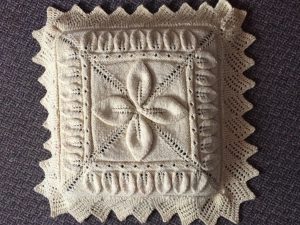
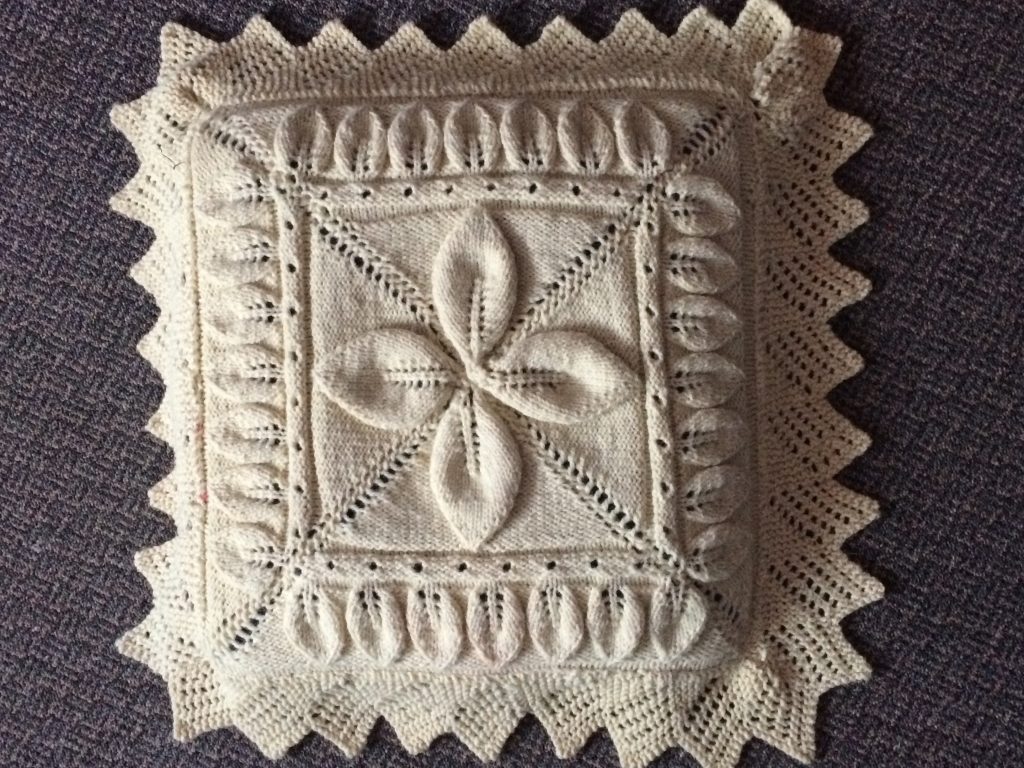
Recreated counterpane leaf pattern in the form of a pillow.
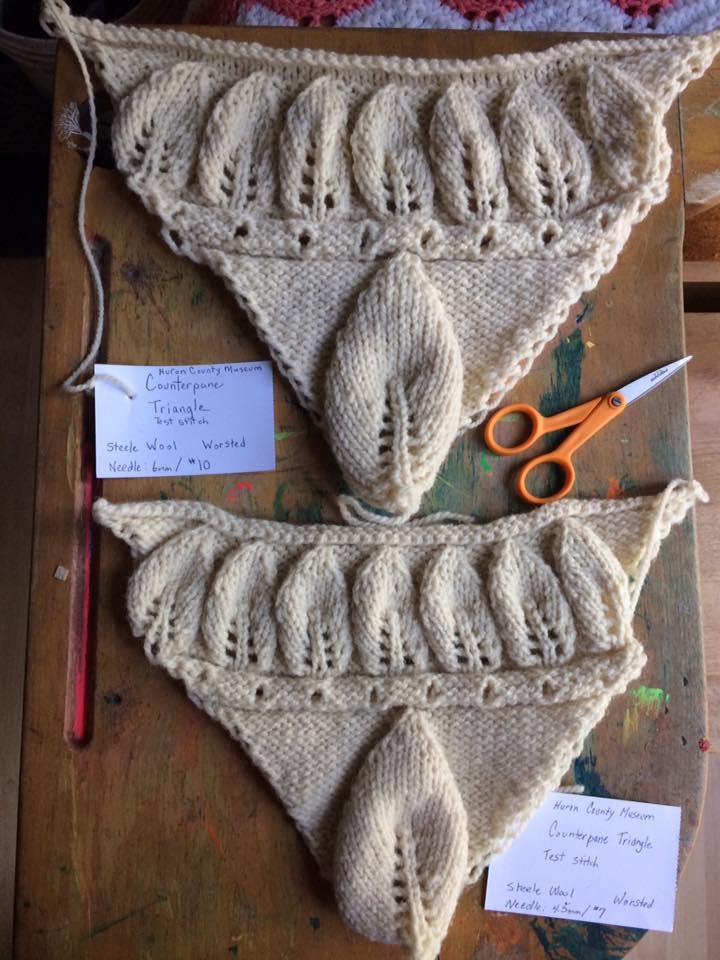
In all of our research, we were unable to find an exact pattern for the museum counterpane bureau scarf. But, what we did find was a leaf pattern in one book, a triangle counterpane pattern in another, and then a similar edging in another resource. Essentially, we are attempting to reverse engineer the piece, writing the pattern after examining the item, counting the stitches, looking at the placement of the increases and decreases and so on.
After some trial and error, trying various needles sizes and yarn types and weights, we settled on recreating the pattern in locally sourced worsted-weight wool from Steele Wool Farm.
Counterpane Pillow – A Pattern to Knit
The pattern is available for those of you interested in trying it out.
Here’s a link to the free version of Counterpane Pillow pattern readily accessible as a blog post: Counterpane Pillow Pattern.
Please note: If you’d like to purchase a printed version of the pattern, please visit or contact the Huron County Museum at (519) 524-2686. All proceeds from this project are donated to the care of the textile collection at the Huron County Museum.
The Beloved knitted bonnet is done and is on its way to its new home.
Knit with worsted weight 100% wool from Revolution Wool Company and featuring the ‘Beloved’ design by Tin Can Knits, this commission was a lovely project and one I thoroughly enjoyed creating.
The pattern construction is fun and intriguing, starting with casting on for an icord tie, increasing up one side of the bonnet and then decreasing down the other side to end in the other icord tie. Just a beautiful design to work up.
I hope the new owner will be comfortable and cozy. The wool ‘Harvest’ yarn is soft and warm to the touch and care will be easy considering wool’s many wonderful, natural properties.
Thanks to the customer for ordering such a fun piece to create!
If you’d like to order a handknit ‘Beloved’ bonnet, in the colour of your choice, for your special little one, please reach out to sbolen@stitchrevivalstudio.ca or text 519-357-7578.
Thanks for taking the time to read this post! Have a great day! 🙂
You can find my natural fibre handknits at Maple and Moose gift store in Blyth, Ontario. I am working on the online ordering portion of my website and will let you know when things are ready over on the Shop page.
Maple and Moose is a unique shopping experience, featuring a diverse selection of top-quality Canadian merchandise from gourmet foods to unique custom crafts. Enjoy browsing in a magnificently restored circa 1870’s historic building. Maple and Moose is a vendor co-operative located at 398 Queen St, Blyth, ON. You can reach us at (519) 523-4276.
And just in case you are visiting me here for the first time, my name is Sharlene. I’m into knitting heritage and enjoy reproducing vintage and retro knitting patterns. You’ll find history-inspired pillows and blankets, smaller items such as lavender sachets and ring pillows, knitted stuffies for the little ones, as well as mittens, both regular and wristers (fingerless mitts) at Maple and Moose. Look for my shelf display beside Revolution Wool Company. Most of my handmade items are knitted from natural fibres, such as wool from Steele Wool Farm or Revolution Wool Company, but I do also work with acrylic yarn occasionally depending on the project and special requests.
I also offer a curated collection of vintage needlework finds, knitting and craft kits, as well as stitching tools and supplies. These tend to vary depending on what I find when I’m out and about.
If you’d like to order a special handknit item, feel free to speak with the staff at Maple and Moose who will be happy to help out and take your order or send me a message at sbolen@stitchrevivalstudio.ca or call 519-357-7578. Please note that I do work out of a small home studio, so the best way to reach me is either at the store or by contacting me directly as mentioned above.
Store Hours
Tuesday – Saturday 10:00 a.m. – 5:00 p.m.
Sunday Closed (unless otherwise noted)
Monday Closed
Open ’til 7:00pm on theatre nights
So excited to be in this bricks and mortar (literally) space with so many other creative makers and top-notch Canadian products! And I’m so very grateful and appreciative of this opportunity to share historically inspired knitted items and patterns, found thrift store needlework treasures looking for a new home, as well as other curated handmade crafts discovered on travels in and around Huron County.
Re-created counterpane leaf pattern in the form of a pillow.
This pillow pattern is inspired by a white cotton counterpane bureau scarf in the collection of the Huron County Museum and Historic Gaol located in Goderich, Ontario.
Please note: If you’d like to purchase a printed version of the pattern, please visit or contact the Huron County Museum at (519) 524-2686.
A traditional counterpane would have been made in white cotton and constructed from a number of smaller units (squares or octagons, for example) that are worked separately and then joined together to create an overall design or effect. The scarf in the museum’s collection is made up of three leaf square units above a panel of leaf lace and then bordered by the pointed lace edging. Cotton rug warp was used to knit the piece, a common practice at the time. Below are a number of images of the original bureau scarf as well as the reproduction.
The original
Counterpane Pillow – A Pattern to KnitThe inspiration. This photo shows the upper-left corner of the original heirloom knit counterpane bureau scarf in the collection of the Huron County Museum and Historic Gaol. (Photo courtesy of the Huron County Museum and Historic Gaol)
The front of our counterpane pillow features the 4-part counterpane square as does the back of the pillow. The pointed lace edging is a recreation of the original edging on the bureau scarf.
Pattern
FINISHED SIZE This pattern consists of triangles joined together to form a square. Each triangle measures 9” from leaf point to cast-off straight edge. Assembled square measures 18” square, with pointed lace edging, 24” square.
YARN Worsted weight yarn. The sample in the photo was knit with worsted weight yarn from Steele Wool Farm; approximately 3 hanks needed to complete pillow front. NEEDLES Size US 7 (4.5 mm) or size needed to obtain gauge
GAUGE 4 to 5 stitches per inch on a size 7 (4.5mm) knitting needle (gauge is approximate).
NOTIONS Tapestry needle Extra yarn for sewing together 18” pillow form
POINTED LACE EDGING CO 9 sts 1st row: K1, (YO, K2tog) three times, YO, K2 2nd and every alternate row: Knit to end 3rd row: K2, (YO, K2tog) three times, YO, K2 5th row: K3, (YO, K2tog) three times, YO, K2 7th row: K4, (YO, K2tog) three times, YO, K2 9th row: K5, (YO, K2tog) three times, YO, K2 11th row: K6, (YO, K2tog) three times, YO, K2 13th row: K7, (YO, K2tog) three times, YO, K2 15th row: Knit to end 16th row: Bind off 7 sts, K8 Rows 1-16 form pattern. Repeat for desired length.
FINISHING Wash all pieces and lay flat to block, pinning to correct measurements.
CONSTRUCTION For the front and back of the pillow, arrange four triangle units wrong-side up so the leaf corners align at the centre and single crochet triangle units together. Mattress stitch can be used instead of single crochet, but arrange triangles right-side up for this method. Using a whip stitch, sew front and back assembled squares together, leaving one side open for the pillow form to slide in. Slide pillow into place. Sew last side closed or leave open, depending on your personal choice. Attach pointed lace edging around the perimeter of the pillow using mattress stitch. Weave in ends.
ABBREVIATIONS BO bind off CO cast on DEC decrease K knit K2tog knit two stitches together P purl P2tog purl two stitches together RS right side WS wrong side YO yarn over
About the designer
Sharlene Young-Bolen is a Blyth-based knitter with a love & appreciation for all things vintage & handmade. For pattern support or questions, please contact sbolen@stitchrevivalstudio.ca. Irene Kellins is the past owner of Stitches with a Twist, a yarn and sewing shop in the village of Blyth, Ontario. She has had years of experience knitting, crocheting, and sewing, and she especially enjoys instructing others in the needle arts. Irene works out of her home studio in Blyth, Ontario and consulted on this pattern project, helping Sharlene decipher the original piece.
Just wanted to share an update and photo of the log cabin pillow cover on the needles this month.
With the extra snow this year and long winter nights, I’ve been thinking about warmth and home.
The first quilt I made was a traditional log cabin quilt. I gave it to my parents and it has since come back to me after my parents’ consecutive illnesses, Dad’s passing, and the inevitable move to the nursing home for mom.
This same quilt is on now my bed and when I look at it, I remember my Aunt Margaret, my quilting teacher, the hours we spent together and the times she helped me to quilt it when it was in the frame; I remember mom helping me pick out the fabrics and encouraging me to learn a new skill.
The few things, most of them handmade, that I have kept from my parents’ belongings all have separate, individual back stories, providing a link, a thread to follow back and forth, from memory, loss, joy and laughter and back again.
With my focus going to family, home and connection, an idea for these knitted, wool log cabin squares came to mind. These squares are knit on a 4.5mm needle, the size of needle my mom used to teach me to knit all those many years ago and the garter stitch was the first lesson I got. I still have her old needles; the end is snapped off one of them and they are both a little bent and wonky now.
Making things for others creates a connection and provides a way to say, you matter to me.
The wool for the pillow cover comes from two sources: Steele Wool Farm near Blyth and Revolution Wool Company, Wallenstein. The colours were created with natural plant-based dyes.
Stitch Revival Studio specializes in handknits inspired by local fibres and vintage needlework.
I’m a one-woman, home-based knitting business based in Huron County, Ontario. I enjoy creating knitted baby bonnets, toys, pillows, mittens, herbal sachets and bridal ring pillows inspired by heirloom patterns, needlework history and naturally sourced fibres and colours.
I came up with the name ‘Stitch Revival’ as a way to explain my knits are inspired by heritage and heirloom pattern research, bringing back old patterns with natural yarns. As well, the process of knitting makes me happy and rejuvenates my creativity. There’s a calming, meditative quality to knitting that is beneficial to my creative process so I primarily work with simple, meditative, calming patterns for my products.
Home decor items
I enjoy making home decor items such as pillows and blankets, inspired by heirloom patterns, and if you have a preferred style or fibre let me know. I get a creative boost when knitting home items as they are give me more opportunity for playing with design, yarns and colours.
Vintage needlework treasures & finds
I collect and rehome vintage needlework treasures that I find in thrift stores and second-hand shops, believing that handmade treasures should be taken care of as they represent a connection to the maker and traditional needlework skills. If you’re looking for a needlepoint, cross-stitch or other needlework treasure, including vintage patterns and patternbooks, let me know. You’ll see some of these collected vintage treasures at Maple and Moose as well.
Knitted mittens
Looking for a pair of knitted mitts? I’m your girl for this one. I’m a maker member of Ontario Fibreshed and enjoy working with locally sourced wool as well as other fibres. If you are looking for a unique, locally inspired gift for those you care about, let me know and I’m happy to help. As I work out of my home, I can take orders by email to sbolen@stitchrevivalstudio.ca or give me a call at 519-357-7578. If you’d prefer to shop in person, I am a vendor at the co-operative artisan market and gift store, Maple and Moose in Blyth, Ontario and so have a number of my knitted items on display there and ready for purchase.
Herbal sachets & ring pillows
I make knitted and crocheted herbal sachets as well as bridal ring pillows. Currently, I’m knitting a variety of sachets in local wool and naturally dyed colours. I love working with natural, local fibres and find it gives me a great deal of joy to combine locally grown fibre with the meditative power of knitting and rejuvenating affect of herbal aromatherapy. The sachet patterns are all inspired by old knitting patterns that I have come across, each sachet uniquely different from the other. If you are searching for that special bridal ring pillow, I’m happy to consider a special order for a certain colour, size, fibre and pattern – just contact me at any time to chat.
Natural fibre producers
If you are a natural fibre producer (wool, alpaca, angora rabbit, linen), I’d be interested in connecting and working with your yarn and/or perhaps collaborating on a pattern or two. I also provide shelf space at the co-operative store devoted to displaying locally produced, natural yarn, offering a unique curated collection. Currently I offer yarn for sale from Revolution Yarn Company and from Alpaca Time. Just send me a message at sbolen@stitchrevivalstudio.ca or text 519-357-7578 to start the conversation.
If you’d like to read more about Stitch Revival Studio, please check out the About page.
Thanks for visiting and have a great day – Sharlene Young-Bolen
Good day, friends! It’s almost April and that means, springtime, a time for growing.
Did you know that I’ve been accepted to be a vendor at Maple and Moose in Blyth?! It’s true!
Stitch Revival Studio has moved into a main street retail vendor space. So excited to be in this space with so many other creative makers and top-notch Canadian products! And I’m so very grateful and appreciative of this opportunity to share historically inspired knitted items and patterns, found thrift store needlework treasures looking for a new home, as well as other curated handmade crafts discovered on travels in and around Huron County.
Stitch Revival Studio products
What do I make? I enjoy reproducing vintage knitting patterns and textiles, so you’ll find history-inspired pillows and blankets, smaller items such as lavender sachets and ring pillows, knitted stuffies for the little ones, as well as mittens, both regular and wristers (fingerless mitts). Most of my handmade items are knitted from natural fibres, such as wool from Steele Wool Farm located not far from Blyth, but I do also work with acryclic yarn occasionally depending on the project and special requests.
About Maple and Moose
Maple and Moose is a unique shopping experience, featuring a diverse selection of top-quality Canadian merchandise from gourmet foods to unique custom crafts. Enjoy browsing in a magnificently restored circa 1870’s historic building. Maple and Moose is a vendor co-operative located at 398 Queen St, Blyth, ON. You can reach them at (519) 523-4276.
I’ve been working on a video series on how to knit the Huron Wristers. The videos are meant to help beginners or knitters with a little experience who would like to knit their own pair of history inspired wristers but maybe need some help with knitting in the round and colourwork.
My knitting skill level is experienced beginner, so I’m always learning, reading and asking lots of questions. I would like to let you know that the wristers aren’t difficult to make; with a few basic skills in hand, they are designed to be a friendly and inclusive knit: quick and fun for experienced knitters and a small challenge for beginners.
These are my first-ever video tutorials, so you may note a few audio or image glitches, but overall, they provide a good run through on how to knit the wristers.
Was there a family tie to either Estonia or the British Isles? The answer would help to identify the glove pattern perhaps. When an instagram post by Best Dishes, a Goderich business owned by Sarah Anderson, appeared in my feed one day identifying the wristers pattern as based on a family heirloom, chance had dropped the perfect opportunity. It was time to connect. A couple messages back and forth and the story unfolded…
History of the Wheeler Family
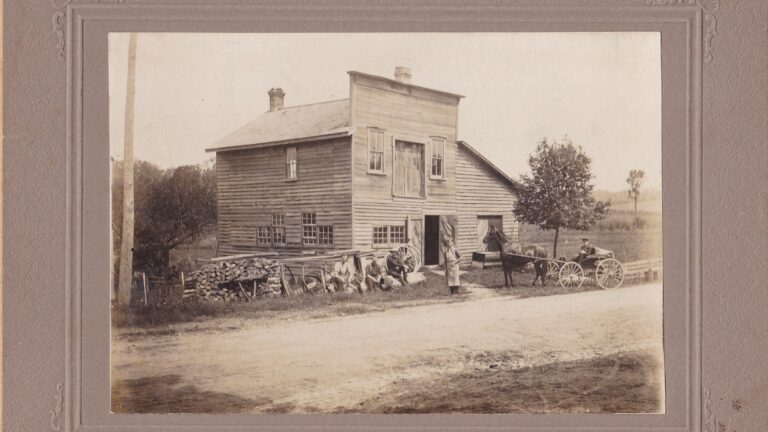
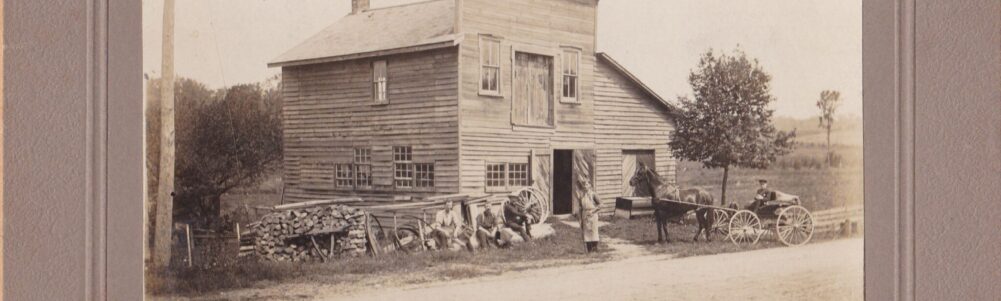
Herb Wheeler's Carpentry Shop in Belgrave, Ontario, Herb standing in front (Photo courtesy of Richard Anderson).
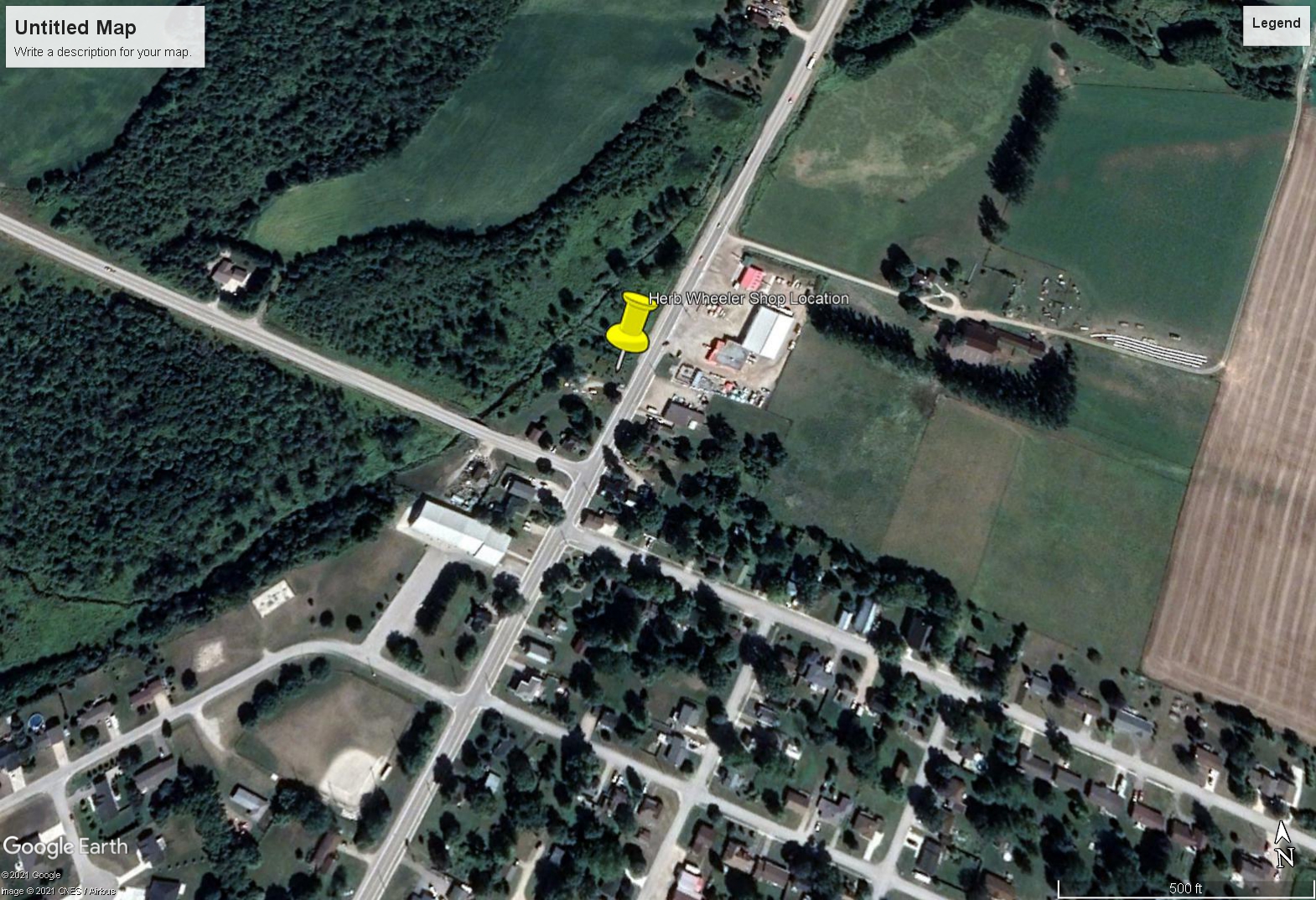
The yellow pin marks the location of Herb Wheeler's shop. The intersection in the center is downtown Belgrave and the road going off the top is County Rd 4 (London Road) heading toward Wingham.
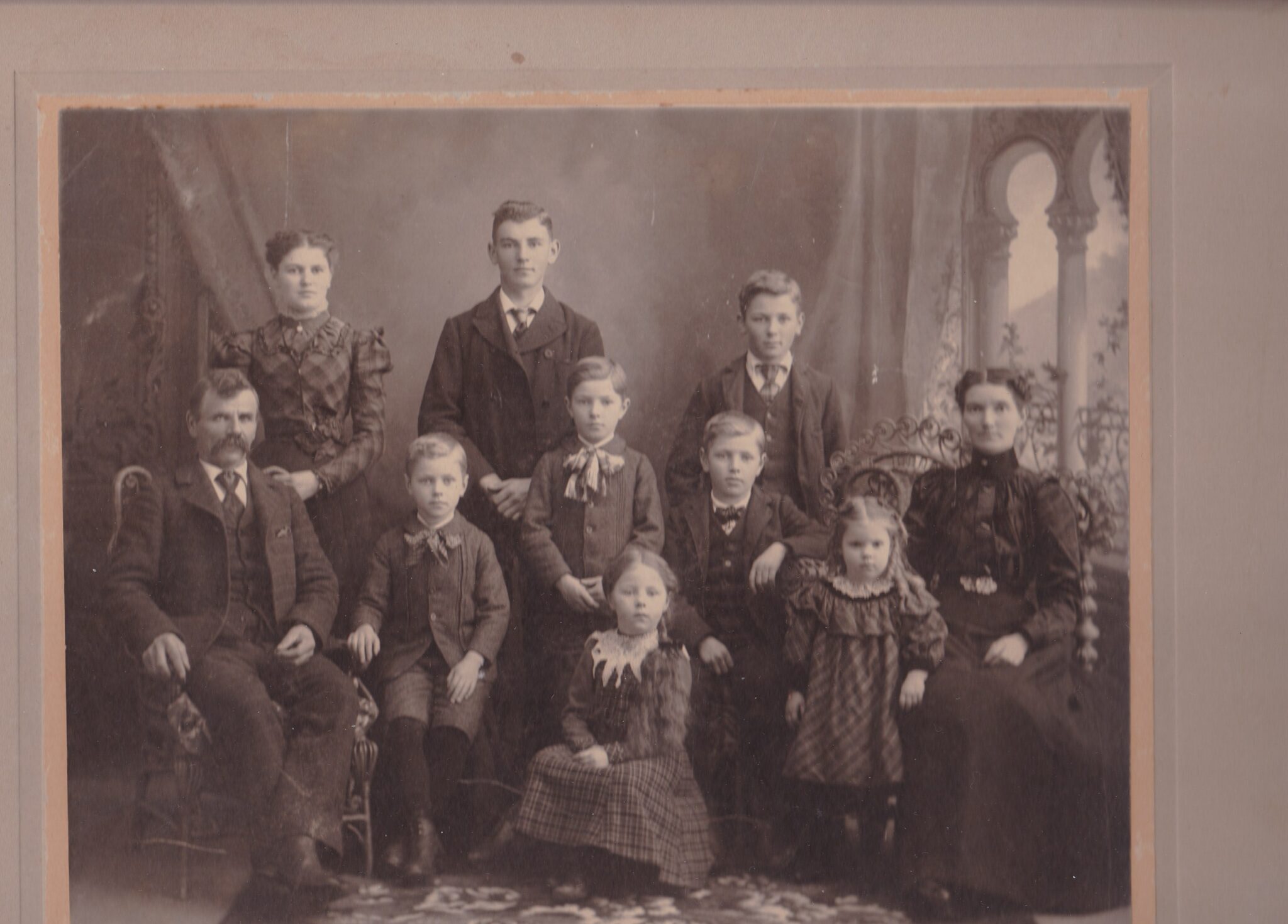
The Charles Wheeler Family circa 1900. Back: Carrie, Herb, Ernest. Centre: Charles, Cecil, Jesse, Lennie, Mary Ann; Front: Lena, Myrtle (Photo courtesy of Richard Anderson).
The Charles Wheeler Family, standing in birth order; youngest to oldest, L-R Myrtle, Lena, Cecil, Jesse, Lennie, Ernie, Herb, Carrie (Photo courtesy of Richard Anderson).
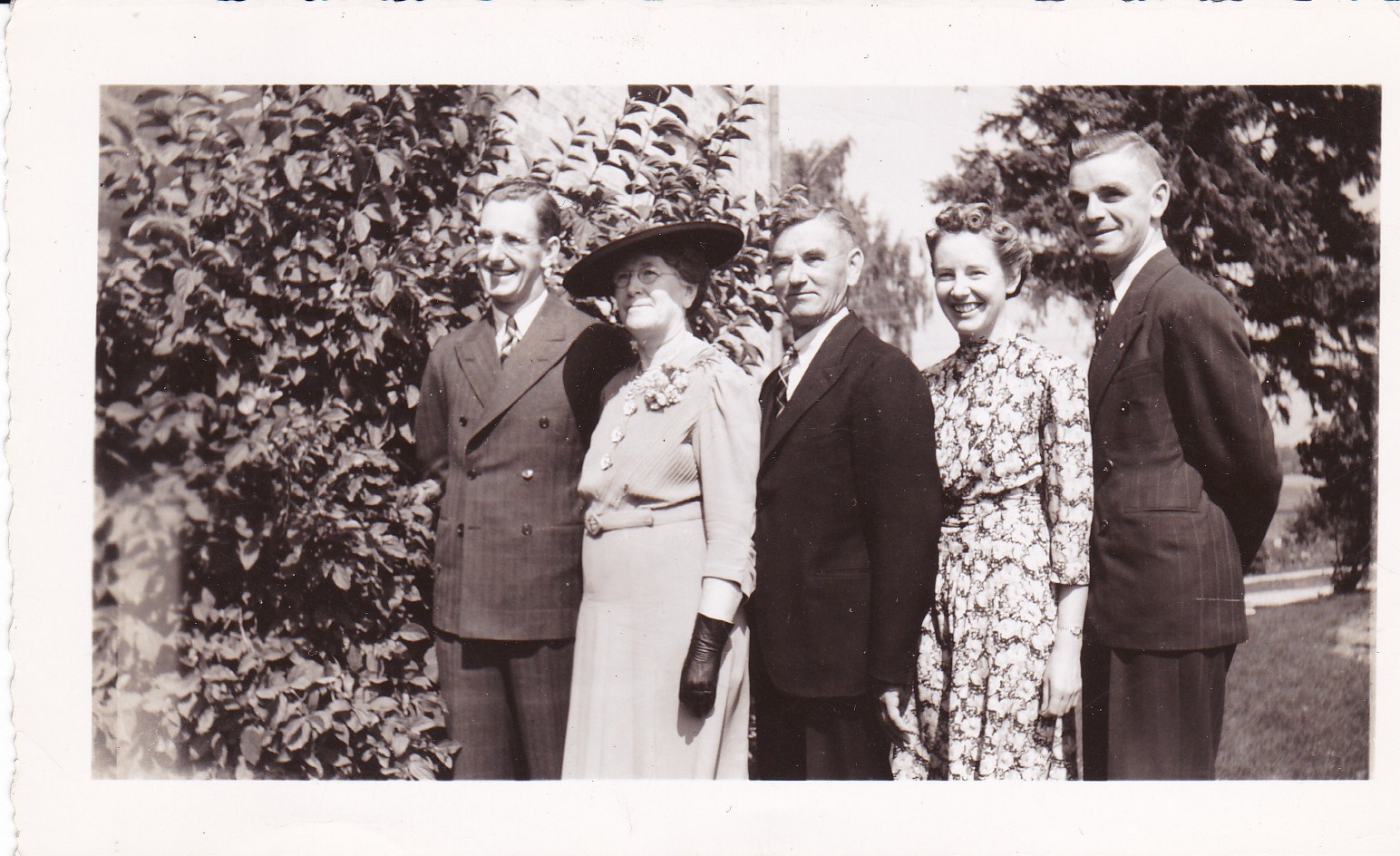
The Herb Wheeler Family: Goldie, Pearl, Herb, Velma and Ken (Photo courtesy of Richard Anderson).
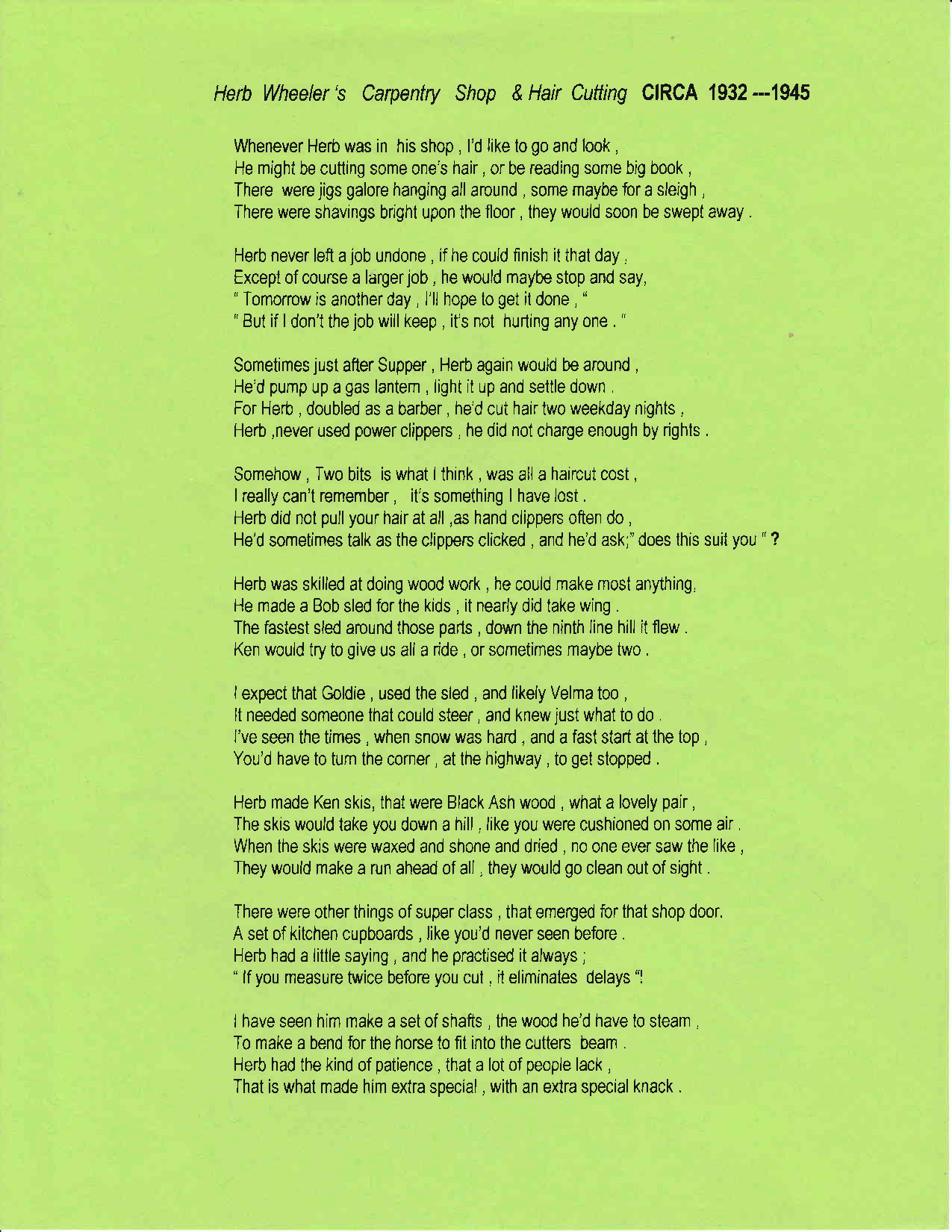
A poem written about Herbert Wheeler by a family member (Courtesy Richard Anderson; author unknown).
Former location of Herbert Wheeler's Shop, Belgrave, Ontario
Sarah as it turns out, is the daughter of Richard Anderson, great-nephew of Herbert Wheeler. Richard sent the following information about the history of the Charles Wheeler Family:
Charles Wheeler Sr. was born in Dorsetshire, England and came to Canada in 1846, locating in Tecumseh Township where he spent 18 years. In 1864 he moved with his family to Morris Township where he bought 300 acres which would be the N ½ of Lots 10, 11 and 12, Concession 5, more commonly known as the 4th Line. He married Caroline Lawrence and they raised a family of five sons, Charles, John and Lawrence of Morris Twp., William of Alma and Frank of Belgrave, and a daughter Mrs. Ann Hughes of Escanaba, Michigan.
This history is meant to briefly chronicle the family of Charles Wheeler, son of Charles Wheeler Senior.
Charles Wheeler married Mary Ann Wilkinson and they raised a family of five sons and three daughters.
Carrie married Andrew Taylor and they lived in Wingham. They didn’t have any family.
Herbert married Pearl Procter. They lived in Belgrave and had three of a family. Goldie, who married Winnie Lane and lived in London. Velma married Wilfred Pickell and lived in Vancouver. Ken married Mabel Coultes and farmed in East Wawanosh before retiring to Belgrave.
Ernest married Verna Elkington and lived mostly in Alberta and Saskatchewan. They had a family of two girls, Verna Wheeler who lived in Vancouver and Ila who lived in Alberta.
Lennie married Jennie Jordan and they lived most of their married life in Vancouver. They had a family of one boy, Howard, and one daughter, Gladys, both of B.C.
Jesse married Hazel Campbell and later Ethel Willock. They didn’t have any children.
Cecil married Edna Scandrett and Laura Robinson who both predeceased him. His first marriage to Edna Scandrett had a family of three girls. Nora who lived in London was married to Bernard Crellin. Ruth married Laurence Davis and lived in Brampton. Mary and her husband Bert Turner lived in Abbotsford B.C.
Lena married Nelson Higgins and they farmed in Morris Twp. They had a family of 8 children. Dorothy, Charles and Norman never married. Ferrol married Carman Farrier, Carrie married Tom Pletch, Ross married Wilma Johnston.
Myrtle married Jack Anderson and lived in Belgrave. They had a family of four children. Ross who married Barbara Michie and lived in Belgrave, Marie who died, aged two years. Lloyd married Eleanor Litt and lived in London. Donna who married Les Shaw and now resides in Goderich.
More interesting information about this branch of the Wheeler family…..
Charles Wheeler farmed on Lot 12 and after his death in 1913 his son Jesse took over the home farm. When Jesse married, his mother moved to Belgrave to the house now occupied by Wes and Annie Cook. Jesse continued to farm there until he retired to Belgrave.
Cecil farmed Lot 11 until he retired to Blyth.
Herbert had a wood working shop in Belgrave.
Ernest worked for the C.N.R. as an agent and dispatcher.
Carrie and her husband owned and operated the Queen’s Hotel in Wingham.
Lena and her husband farmed in Morris Tsp.
Myrtle and her husband lived in Belgrave and Jack operated a custom threshing operation.
Ironically, the only descendants of this family of Wheelers who continued farming in Morris were Lena’s son Ross Higgins and his son Bruce.
A note from David Pickell, Herbert Wheeler’s grandson
Hi! I’m Herb Wheeler’s grandson… When I knew my grandparents, Pearl and Herb, they lived in Belgrave. Their three children were Goldwyn (a school principal in London), A. Velma (my mother) and Kenneth, a farmer who lived and farmed a few minutes drive from Belgrave… Herb Wheeler was a carpenter and, as the name suggests, repaired farm equipment such as wooden wheeled carts etc. He was quiet, and had a subtle sense of humour us kids loved…” – David Pickell
The following poem written about Herbert Wheeler by a family member definitely gives a wonderful, lasting impression of just who Herbert was and his occupation as a talented woodworker, carpenter and barber. It would have been great to experience just what this writer did so long ago.
Herb Wheeler’s Carpentry Shop & Hair Cutting CIRCA 1932-1945
Whenever Herb was in his shop, I’d like to go and look,
He might be cutting some one’s hair, or be reading some big book,
There were jigs galore hanging all around, some maybe for a sleigh,
There were shavings bright upon the floor, they would soon be swept away.
Herb never left a job undone, if he could finish it that day,
Except of course a larger job, he would maybe stop and say,
“Tomorrow is another day, I’ll hope to get it done,”
“But if I don’t the job will keep, it’s not hurting any one. ”
Sometimes just after Supper, Herb again would be around,
He’d pump up a gas lantern, light it up and settle down.
For Herb, doubled as a barber, he’d cut hair two weekday nights,
Herb, never used power clippers, he did not charge enough by rights.
Somehow, Two bits is what I think, was all a haircut cost,
I really can’t remember, it’s something I have lost.
Herb did not pull your hair at all, as hand clippers often do,
He’d sometimes talk as the clippers clicked, and he’d ask, “does this suit you” ?
Herb was skilled at doing wood work, he could make most anything,
He made a Bob sled for the kids, it nearly did take wing
The fastest sled around those parts, down the ninth line hill it flew.
Ken would try to give us all a ride, or sometimes maybe two.
I expect that Goldie, used the sled, and likely Velma too,
It needed someone that could steer, and knew just what to do.
I’ve seen the times, when snow was hard, and a fast start at the top,
You’d have to turn the corner, at the highway, to get stopped.
Herb made Ken skis, that were Black Ash wood, what a lovely pair,
The skis would take you down a hill, like you were cushioned on some air.
When the skis were waxed and shone and dried, no one ever saw the like,
They would make a run ahead of all, they would go clean out of sight
There were other things of super class, that emerged for that shop door.
A set of kitchen cupboards, like you’d never seen before.
Herb had a little saying, and he practised it always
“If you measure twice before you cut, it eliminates delays”!
I have seen him make a set of shafts, the wood he’d have to steam
To make a bend for the horse to fit into the cutters beam.
Herb had the kind of patience, that a lot of people lack,
That is what made him extra special, with an extra special knack.
In conclusion
So far, the research has yielded no straight answers as to the gloves’ origin, but the search continues. While a pattern might give you a hint to the origin of a knitted item, you need to identify more such as the cast-on method, the type of ribbing, how the fringe was made, and how the strands (or floats) were carried across the back of the knitting. A full reproduction of Herbert’s gloves would help to answer the remaining questions.
In conclusion, there really isn’t a conclusion… But what I can say is that taking the time to explore knitting traditions and a local family’s history has been a fascinating, rewarding experience. I’m so grateful for Herbert’s relatives who have answered my questions and sent so many wonderful images to be shared here with everyone. They went to a lot of work to compile the info and family photographs and I can’t thank them enough for all their time and effort.
I’ve come to think that the original knitter may have incorporated features that he liked into these gloves, perhaps not following one certain pattern, but rather combining different elements into one. A full recreation of the gloves is planned for late fall 2021 and right now I’m testing a local wool I may be using for the reproduction. Stay tuned to the website for further updates as we move forward.
Huron Wristers Knitting Kit: If you’d like to knit a pair of Huron Wristers for yourself, please go to the FACTS website to purchase a kit.
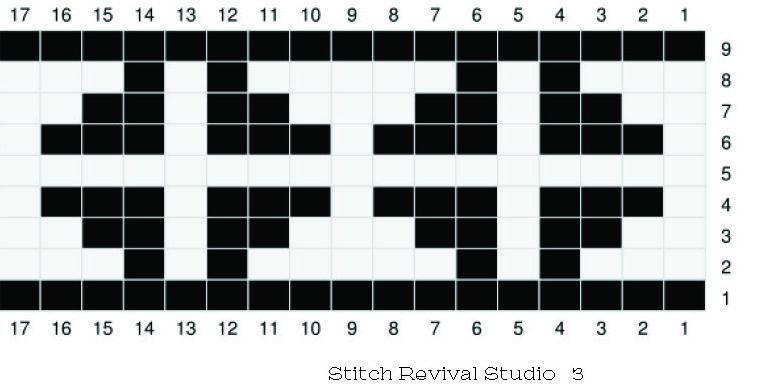
Alternatively, if you’d like to work with the colourwork pattern and stitch some history with your own yarn, here is a chart to get you started! The chart could probably also be used for cross-stitching or rughooking and I’d love to see how that would turn out.
Stitch Revival Studio on YouTube: Looking for a how-to on how to knit the gloves? I’ve just created a YouTube channel and will be uploading a series of Huron Wristers knitting how-to’s.
For me, this journey is all about the story in the stitches. It’s so wonderful to see people knitting local history and in doing so connecting with Herbert and his family. This brings history alive, this act of recreation, connecting us to Herbert, to our knitting traditions, and the wonderful textile collection at Huron County Museum and Historic Gaol. Imagine all the stories held within their textile collection, each item just waiting to share its history.